Marvel Rivals hardstuck claims fall apart when a Grandmaster lobby gets spectated
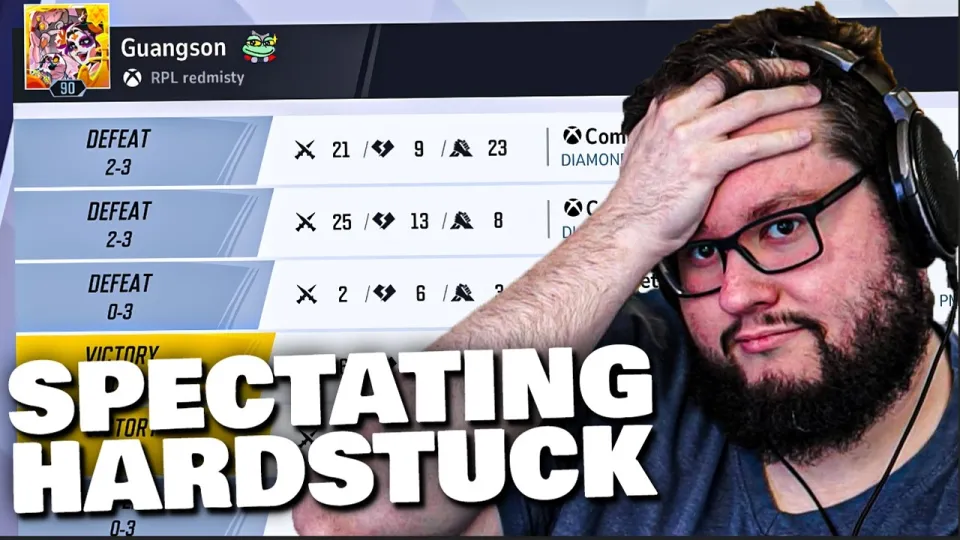
Video: I Spectated Someone Who Claimed To Be Hardstuck In Marvel Rivals
Want articles like this for your own video to promote it on YouTube and Google? Order them through the Telegram bot @sat_sit_bot. It writes articles around your video, embeds the video and publishes them on popular niche websites (no ads). Free trial — 50 articles.
· based on the channel Flats
Being hardstuck in Marvel Rivals is almost never about the matchmaker alone. When Flats spectated a player who insisted his teammates were holding him back, the footage showed the opposite: a Grandmaster-ranked Cloak and Dagger who ignored health packs, wasted ultimates and blamed everyone else. You can watch Flats review ranked games like this live on his Twitch channel, where the same breakdowns happen in real time.
What the Marvel Rivals hardstuck review actually showed
The core finding is simple: the player's rank was Grandmaster, yet his decisions looked nothing like the rank. Flats walked through the match and pointed out moments where the player had clear options and picked the worst one. The most repeated example was the health pack problem — the player walked straight past a pack while searching for healing, which tells you he was not tracking the map at all. That single habit costs more fights than any teammate ever will.
The second pattern was ultimate usage. A support ultimate in Marvel Rivals is a fight-winning tool, and the review showed it being spent with no follow-up, no line of sight on the team and no plan. When your big cooldown does nothing, the enemy team gets a free push, and your teammates look terrible because they died to damage you could have prevented. That is how a support player convinces himself he is hardstuck while actually being the reason the fight was lost.
Why the Cloak and Dagger pick mattered
The player was effectively playing Dagger only, treating Cloak as a character he never switched to. Cloak and Dagger is one of the most flexible supports in Marvel Rivals precisely because the swap gives you escape, damage and a blind, but that value only exists if you use it. Staying on Dagger the whole match means giving up the toolkit that makes the hero worth picking over a simpler healer.
Viewers picked up on this immediately, and the joke that landed hardest was that the player was "playing Dagger, holding the Cloak" — a one-line summary of a support who never uses half his kit. For anyone climbing as a strategist, the lesson is concrete: learn both forms, bind the swap to a comfortable key, and treat Cloak as your answer to dives rather than a form you forget exists.
The ego problem behind a negative win rate
The review also surfaced the detail that stung most: a negative win rate at a high rank. In Marvel Rivals, ranked points can carry a player upward even when they lose more than they win, especially with performance-based adjustments and protection systems. That means a Grandmaster badge is not proof of Grandmaster decisions — it is proof of time invested plus whatever the system handed back.
That gap between badge and skill is exactly where ego grows. The player framed himself as a Spider-Man main, which viewers found telling: a duelist background explains the instinct to hunt kills instead of holding a support position properly. Flats' point was not that the player is bad at aiming. It was that he had built an identity around being good and had no framework for admitting mistakes, so every loss became someone else's fault and nothing ever changed.
Common questions from players who feel stuck
Players who watched the breakdown kept asking the same things, and they are worth answering directly.
- "Isn't it sometimes the teammates?" Yes, some games are unwinnable. But a player who reviews his own footage will almost always find two or three decisions per match that were fully in his control — positioning, cooldown usage, target priority. Fix those and the unwinnable games stop mattering.
- "Does rank actually mean anything in Marvel Rivals?" Rank shows a range of ability, not a fixed skill level. Two Grandmaster players can be very far apart in decision-making, which is why scouting a teammate's recent history is more useful than looking at the badge.
- "Is a Dagger-only playstyle viable?" It can work in lower ranks where dives are rare, but it collapses as soon as enemy duelists know how to pressure the backline. Learning the Cloak swap is the fastest single upgrade available to a Cloak and Dagger player.
- "How do I know if I'm the problem?" Watch one replay from the enemy's point of view. If your positioning looks like a free kill, it is.
How to stop being hardstuck in Marvel Rivals
Climbing starts with an honest audit rather than a new main. Record three ranked games, then watch them back with a single question per pass: where did I die, and what did I have available that I did not use? Most support players will find the same three leaks — healing from the wrong angle, holding ultimates too long or spending them too early, and never contesting high ground.
Next, set one mechanical rule per session. Examples that work: never walk past a health pack without noting it, always check whether Cloak's escape is off cooldown before pushing, and never use a support ultimate without at least one teammate in position to benefit. Track whether you followed the rule, not whether you won, because the wins follow the habits.
Finally, drop the story that teammates are the ceiling. The player in this review proved the opposite of what he intended: he showed that a player can reach Grandmaster and still lose games to his own decisions. That is good news, because your own decisions are the only thing you can actually change.
Where to watch the full Marvel Rivals breakdown
Flats is an Overwatch veteran who now covers Marvel Rivals ranked games, spectating players who ask for a review and taking apart the decisions behind their rank. The channel's format is consistent: watch the game, pause on the mistakes, and explain what a higher-level player would have done instead. If you want more of these reviews, the live show is the place to find them, and the clips channels collect the sharpest moments.
All the links from the video
- Twitch, live streams and the full spectating sessions: https://www.twitch.tv/flats
- Discord community: https://discord.gg/flats
- Twitter/X updates: https://twitter.com/Flats_Ow
- TikTok clips: https://www.tiktok.com/@flats_ow
- Facebook page: https://www.facebook.com/FlatsTTV
Final thoughts on the hardstuck myth
The Marvel Rivals hardstuck claim in this video did not survive contact with the replay. A Grandmaster player with a negative win rate, a Dagger-only support and a Spider-Man main's mindset walked past health packs and wasted ultimates while insisting his teammates were the problem. The review is funny, but the takeaway is practical: rank is a starting point for self-review, not a certificate of skill. Flats built the breakdown, and the live show on Twitch is where the next one happens — bring a replay and an open mind.
Key takeaways
- Flats reviewed a Marvel Rivals player who insisted his teammates were the reason he could not climb.
- The player was in Grandmaster rank while playing Cloak and Dagger as a Dagger-only pick.
- He described himself as a Spider-Man main, a detail viewers linked to his refusal to take accountability.
- The review flagged missed health packs, wasted ultimates and a negative win rate despite the high rank.
- Flats streams Marvel Rivals and Overwatch live on Twitch at twitch.tv/flats.
Source: I Spectated Someone Who Claimed To Be Hardstuck In Marvel Rivals · Markdown version
Questions & answers
Why do players get stuck in Marvel Rivals even at high ranks like Grandmaster?
Ranked points in Marvel Rivals can carry a player upward even with a losing record, thanks to performance adjustments and protection systems. That means a high badge reflects time played, not necessarily decision quality. The spectated player had a negative win rate while sitting in Grandmaster, and his mistakes — missed health packs, wasted support ultimates — were the same ones seen in far lower ranks.
Is Cloak and Dagger viable if you only play Dagger?
It works in lobbies where nobody pressures the backline, but it gives up the hero's main advantage. Cloak provides escape, damage and a blind that answers dives, so a Dagger-only player has no answer when enemy duelists commit. Learning the swap and binding it comfortably is the fastest improvement available to a Cloak and Dagger player.
Does having a Spider-Man main background hurt you as a support player?
It can, because duelist habits push you toward hunting kills instead of holding position and keeping the team alive. The player in the review framed himself as a Spider-Man main, and his support play showed that aggressive instinct without the discipline the role needs. Switching roles is fine; switching without relearning priorities is not.
How can I tell whether my teammates or my own play is holding me back?
Review three recorded ranked games and count only the decisions you controlled: positioning, cooldown usage, ultimate timing, target priority. Most players find two or three repeatable leaks per match. If those leaks are fixed and the losses continue, then look at team composition and matchmaking — but check yourself first.